This article contains affiliate advertising and promotions.
- Why This Is More Than Just a Sports Manga: A Masterpiece of Human Psychology
- Story Synopsis: The Unspoken Battle Between Two Friends
- The Artistic Philosophy of Taiyo Matsumoto
- Adaptations: A Rare Success on Every Screen
- Final Thoughts: The Pain and the Urge to Move Forward
- End Notes
- これは単なるスポ根漫画ではない。人間心理を深く描いた傑作
- ストーリー概要:二人の友人の間に起こる言葉なき戦い
- 松本大洋の芸術性と哲学
- 映像化作品:成功したメディア展開
- 読後感:胸をかすめる痛みと、前に進みたくなる感情
- 終末情報
Why This Is More Than Just a Sports Manga: A Masterpiece of Human Psychology
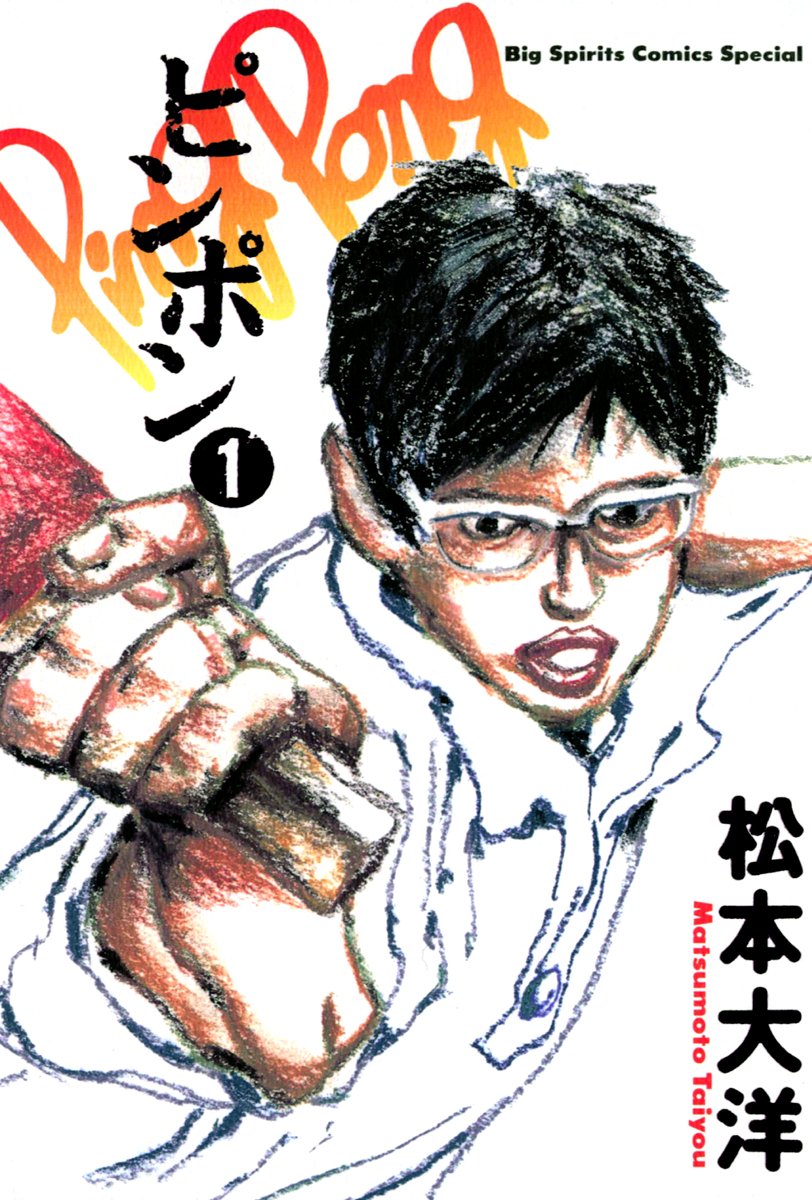
Taiyo Matsumoto’s Ping Pong is a masterpiece that goes far beyond the sports genre. It is a work that directly confronts the weaknesses and brilliance that everyone holds deep within their hearts: talent, inferiority complex, friendship, and escape. The story, completed in five volumes, offers a compact yet emotionally vast journey that many readers consider a manga of a lifetime.
A unique feature of this work is that it is a rare example where the manga, the anime, and the live-action film have all succeeded. The core theme remains consistent across all media, often complementing and strengthening the overall experience.
Story Synopsis: The Unspoken Battle Between Two Friends
The narrative centers on two childhood friends, Hoshino Yutaka (Peco), the natural-born, charismatic player, and Tsukimoto Makoto (Smile), the quiet, reserved prodigy. The world of high school table tennis becomes their crucible, forcing them to confront not only their rivals but the complex dynamics of their own existence and their differing relationships with the sport.
- Peco and Smile: Their relationship is the engine of the story. One embodies the flair and joy of the game; the other possesses immense ability but treats the sport with a profound emotional distance.
- The Rivals: The supporting cast, including formidable opponents like the passionate foreign player and the powerful high school champion, each represent a different facet of ambition and struggle within the competitive world.
The Artistic Philosophy of Taiyo Matsumoto
Matsumoto’s distinctive, dynamic art style is integral to the story’s power. He uses highly stylized, often volatile exaggeration during play, transforming simple table tennis matches into existential, high-stakes battles.
The author’s drawing style initially looks “unconventional” and “intense,” but as you read, you realize its unique style perfectly harmonizes with the work’s world:
- The Power of Line: The unstable lines reflect the players’ wavering hearts.
- Visual Rhythm: The uneven panel progression creates the tension and rhythm of the intense matches.
- Unspoken Emotion: The sheer force in moments of emotional explosion is more eloquent than any dialogue.
Adaptations: A Rare Success on Every Screen
Ping Pong is one of the rare Japanese works to be successfully adapted into both live-action and anime formats, proving its universal appeal:
- Live-Action Film (2002): A Successful ExceptionThe film is regarded as an exceptional success because the casting and acting fit the characters unusually well. Yōsuke Kubozuka (Peco), Arata Iura (Smile), and Shidō Nakamura (Dragon) embodied the roles beyond mere imitation, adding their own sense of realism and energy without compromising the original atmosphere.
- Anime Series (2014): The Ultimate ExpressionPing Pong The Animation, directed by Masaaki Yuasa (known for Devilman Crybaby), is a globally celebrated miracle. The director utilized the “disorder” in the original artwork to intentionally create a sense of realism and reproduced the speed of the game through expressive line movement and profound psychological depth.
Final Thoughts: The Pain and the Urge to Move Forward
Ping Pong is more than a table tennis manga; it confronts us with a life-altering question: “How do you face your own talent?”
When you close the final volume, your chest may ache slightly, yet you will feel an urge to move forward. To encounter a work that leaves you with such a profound feeling is a fortunate experience in itself.
| Store | Link |
| Amazon US | Ping Pong, Vol. 1 |


End Notes
| Item | Details |
| Original Story & Art | Taiyo Matsumoto |
| Publisher/Series | Shogakukan |
| Volumes | 5 Volumes (Completed) |
| Genre | Sports / Psychological Drama / Slice of Life |
| Anime | TV anime “Ping Pong” official website |
| Movie | Ping Pong movie official website |
Thank you for reading until the end.
🌸日本語訳 ピンポン ― アニメも実写も成功した、奇跡のスポーツ漫画
本記事にはアフィリエイト広告およびプロモーションが含まれています。
これは単なるスポ根漫画ではない。人間心理を深く描いた傑作
松本大洋先生による『ピンポン』は、スポーツ漫画でありながら、少年の心の奥底にある**「才能」「劣等感」「友情」「逃げ」**といった、だれもが抱える弱さと輝きに真正面から触れる名作です。
全5巻というコンパクトな構成ながら、多くの読者が「人生の漫画」と呼ぶほどの、感情的に広大な旅を提供してくれます。
そしてこの作品の特異さは、漫画・アニメ・実写映画、そのすべてが成功した稀有な例であること。どの媒体でもテーマが崩れず、むしろ補完し合っている点が特徴です。
ストーリー概要:二人の友人の間に起こる言葉なき戦い
物語は、幼馴染の二人の天才、天真爛漫な星野裕(ペコ)と、感情を表に出さない冷静な月本誠(スマイル)を中心に展開します。高校の卓球という舞台は、彼らにとってライバルと向き合うだけでなく、彼ら自身の複雑な存在と、スポーツに対する彼らの異なる関係性に向き合う試練の場となります。
- ペコとスマイル: 二人の関係性が物語の原動力です。一人はゲームの華やかさと喜びを体現し、もう一人は強大な能力を持ちながら、スポーツに深い感情的な距離を置いています。
- ライバルたち: 脇役陣も、競争の世界における野心と葛藤の異なる側面をそれぞれ体現しています。
松本大洋の芸術性と哲学
松本先生の独特でダイナミックな画風は、この物語の力に欠かせません。彼は、卓球の試合を高度に様式化された、ほとんど爆発的な誇張を用いて描き、単なるスポーツの試合を実存的な、命運を賭けた戦いへと変貌させます。
松本大洋先生の絵柄は、一目見ただけで「強烈」です。ですが不思議なことに――読んでいくうちに、その**“癖”**が作品世界と完璧に噛み合っていることに気づきます。
- 線の力: 揺れる線が、選手の揺らぐ心を映す。
- 視覚のリズム: 不均一なコマ運びが、試合の緊張とリズムを作る。
- 言葉なき迫力: 感情が爆発する瞬間の迫力が、どの漫画よりも雄弁。
最初は「見慣れない」と感じても、いつの間にか「これしかない」と思えてしまう。松本大洋先生の凄みは、まさにここだと感じます。
映像化作品:成功したメディア展開
『ピンポン』は、実写とアニメの両方で成功した珍しい日本作品の一つであり、その普遍的な魅力が証明されています。
- 実写映画(2002年):異例の成功漫画原作の実写化としては異例とも言える“成功例”です。その理由は、俳優陣の演技がキャラクターと異常なほどマッチしていたこと。窪塚洋介さんのペコ、ARATA(井浦新)さんのスマイル、中村獅童さんのドラゴンなど、どれも「そこに生きている」と感じる説得力がありました。
- アニメシリーズ(2014年):究極の表現**『ピンポン THE ANIMATION』**は、湯浅政明監督(『デビルマン クライベイビー』で知られる)の表現力が存分に発揮された奇跡の作品です。監督は、絵の“乱れ”を意図的に使った臨場感を出し、松本氏のユニークな画風とリズムを忠実に、かつ独創的に解釈したことで、国内外で広く称賛されています。
読後感:胸をかすめる痛みと、前に進みたくなる感情
『ピンポン』は、単なる卓球漫画ではなく、「自分の才能とどう向き合うか」という人生に関わる問いを突きつけてきます。
ページを閉じたとき、胸が少し痛んで、でも前を向きたくなる。そんな作品に出会えること自体が、もう幸運だと思います。
終末情報
| 項目 | 詳細 |
| 著者 | 松本大洋 |
| 出版社 | 小学館 |
| 巻数 | 全5巻(完結済み) |
| ジャンル | スポーツ(卓球)/青春/ヒューマンドラマ |
| アニメ化 | TVアニメ『ピンポン』公式サイト |
| 映画化 | 映画『ピンポン』公式サイト |
最後まで読んでいただきありがとうございました。
おまけ(Omake)
今回は映画「ピンポン」のエンディングテーマで流れた曲で、SUPERCARが歌う「YUMEGIWA LAST BOY」をご紹介します。疾走感のあるアップテンポな曲で「ピンポン」という作品にピッタリの曲です。気になった方は聴いてみてくださいね。
For this bonus section, we introduce “YUMEGIWA LAST BOY,” the ending theme for the live-action Ping Pong movie, performed by SUPERCAR. It’s an upbeat track with a driving, fast-paced feel that perfectly complements the spirit of the Ping Pong story. If you’re curious, be sure to give it a listen!
| 項目 (Item) | 日本語 (Japanese) | 英語 (English) |
|---|---|---|
| 歌手 (Artist) | SUPERCAR | SUPERCAR |
| 曲名 (Song Title) | YUMEGIWA LAST BOY | YUMEGIWA LAST BOY |
| 備考 (Note) | 映画「ピンポン」エンディングテーマ | Ending theme for the movie “Ping Pong” |
| 提供元 (Source) | SUPERCAR Official YouTube Channelより | From the YouTube SUPERCAR Official YouTube Channel |

コメント