This article contains affiliate advertising and promotions.
🌽 It’s Okay to Run Away if You Find Something Real
In our modern society, there is a lot of pressure to “be successful” or “have a clear dream.” But what happens when you lose your way?
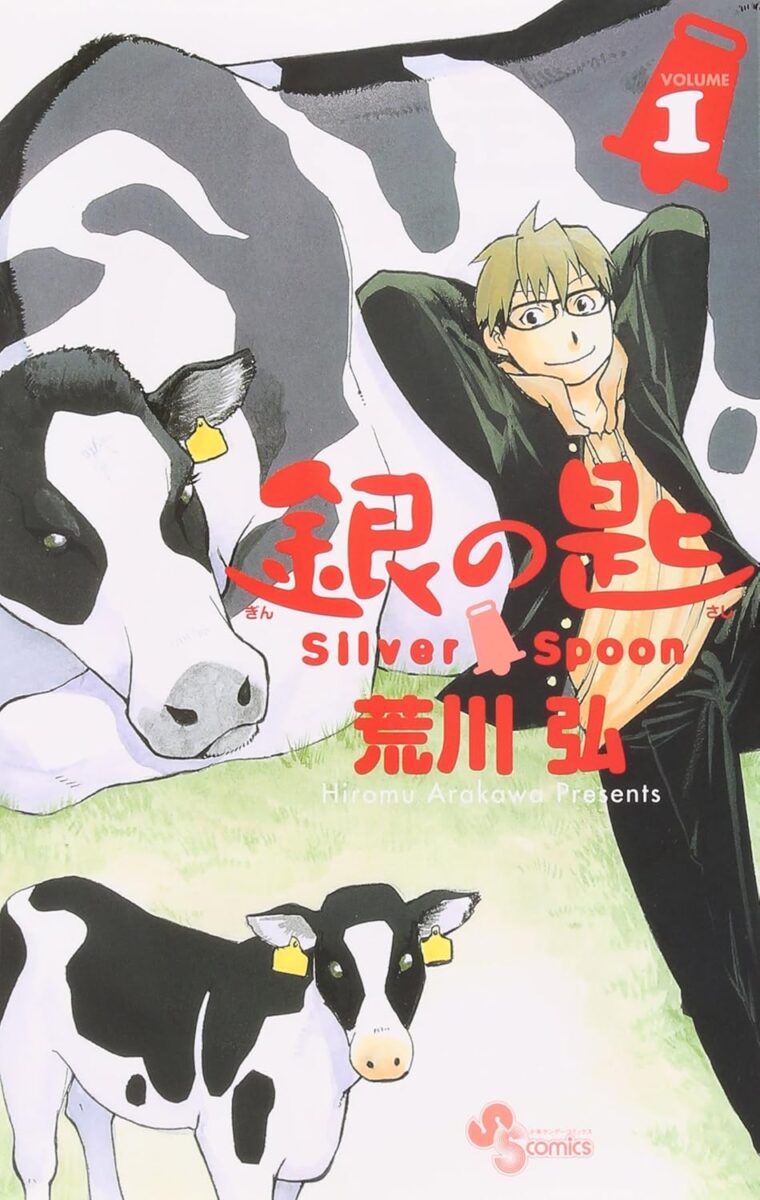
Silver Spoon (Gin no Saji) begins with a protagonist, Yuugo Hachiken, who enters an agricultural high school simply because he wants to escape the intense competition of his previous life in the city.
At first, he feels like a failure for “running away.”
However, in the vast nature of Hokkaido, surrounded by animals and straightforward friends, he begins to discover something far more important than test scores: the reality of “living.”
This story gently whispers to us that running away isn’t a defeat—it can be the brave first step toward finding your true self.
🏫 Ordinary High Schools and Agricultural High Schools A World of Discovery
For someone like me who attended an “ordinary” high school, the life Hachiken and his friends lead was truly surprising.
Instead of just learning formulas from textbooks, they wake up at 4 AM to care for animals.
Living every day in close contact with animals and nature, and experiencing tough physical labor… it made me reflect on my own school days with a sense of wonder.
I believe this will be a great introduction for international readers to discover what “Japanese agricultural high schools” are really like.
🍕 Food Temptation The Joy of Freshly Harvested Ingredients
If there is one thing this manga excels at, it’s truly Food Temptation!
The way Hiromu Arakawa depicts food makes your stomach growl with every page.
- Stone-Oven Pizza The students build their own oven from bricks and bake a pizza with fresh toppings. The sight of the melting, stretching cheese is truly a work of art.
- Tamago Kake Gohan (Egg on Rice) After a hard morning’s work, Hachiken eats a simple bowl of rice with a fresh egg he collected himself.
I remember reading this and immediately going to my kitchen to make my own Tamago Kake Gohan.
Even though it was just a regular egg from my fridge, imagining the flavor from the manga made it taste incredibly special!
It reminded me that the best seasoning for any meal is a deep appreciation for the ingredients.
🌱 Authenticity Born from Experience The Author’s Own Roots
The reason this story feels so real is that the author, Hiromu Arakawa, was actually born and raised on a dairy farm in Hokkaido.
The smell of the soil and the warmth of the animals are things she experienced firsthand.
This isn’t just a fictional story; it’s a message filled with respect for life, delivered by someone who truly knows the world of agriculture.
Her grounded perspective makes every scene feel incredibly sincere.
🥚 Reflecting on the Cycle of Life
Silver Spoon reminds us of the true essence of “eating,” something we often forget in our busy lives.
For Hachiken, life at an agricultural high school means experiencing the cycle of life up close.
While I won’t go into specific details to avoid spoilers, the manga beautifully portrays the weight of the “baton of life”—how the food we eat comes to be.
After reading this, the Japanese expression “Itadakimasu” (gratitude before a meal) will carry a much deeper meaning in your heart.
✨ Finding Your Path A Story for Students and Adults Alike
Although it’s a coming-of-age story set in a high school, it’s a manga that I truly want adults to read as well.
The characters are all a bit clumsy, worrying about their futures and struggling in their own ways.
Seeing them work so hard gave me a lot of courage.
I felt a strong message from the story: that life isn’t all bad, and if you keep moving forward and doing your best, good things will eventually happen.
If you’re feeling lost, why not take a little break and give this manga a try?
I’m sure it will give you a gentle push on the back.


📝 Detailed Information
| Item | Detail |
| Author | Hiromu Arakawa |
| Publisher | Shogakukan (Weekly Shonen Sunday) |
| Volumes | Total 15 volumes (Complete) |
| Serialization | 2011 – 2019 |
| Genre | School Life / Agriculture / Coming-of-Age / Food |
| Recommended for | People worried about their future, animal lovers, and fans of “food temptation.” |
| Related Media | Anime (Season 1 & 2), Live-action Movie |
📺 To check the current streaming availability for the anime, please search for “Silver Spoon” on sites like JustWatch.
Thank you for reading to the end.
🌸日本語訳 🐄 『銀(ぎん)の匙(さじ) Silver Spoon』マンガレビュー 北海道(ほっかいどう)の豊かな大地(だいち)で見つける、人生(じんせい)の本当(ほんとう)の味わい
Note In the Japanese translation section, furigana (reading aids) are provided for all kanji to support Japanese language learners. We appreciate your understanding.
※この日本語訳(にほんごやく)は、日本語学習(にほんごがくしゅう)をされている方(かた)にも楽(たの)しく読(よ)んでいただけるよう、すべての漢字(かんじ)にルビ(読(よ)み方(かた))を付(つ)けています。
日本語(にほんご)に慣(な)れている方(かた)には、少(すこ)し読(よ)みにくい部分(ぶぶん)があるかもしれませんが、どうかご容赦(ようしゃ)ください。
本記事(ほんきじ)にはアフィリエイト広告(こうこく)およびプロモーションが含(ふく)まれています。
🌽 もし本物(ほんもの)が見(み)つかるなら、「逃(に)げる」のだって悪(わる)くない
現代(げんだい)社会(しゃかい)では、「成功(せいこう)しなさい」「夢(ゆめ)を持(も)ちなさい」という強(つよい)いプレッシャーがありますよね。
でも、もし道(みち)に迷(まよ)ってしまったらどうすればいいのでしょうか?
『銀(ぎん)の匙(さじ) Silver Spoon』は、都会(とかい)の競争(きょうそう)から逃(に)げ出(だ)したいという理由(りゆう)だけで、農業(のうぎょう)高校(こうこう)に入学(にゅうがく)した主人公(しゅじんこう)・八軒(はちけん)勇吾(ゆうご)の物語(ものがたり)から始(はじ)まります。
最初(さいしょ)、彼(かれ)は「逃(に)げた自分(じぶん)」をダメな人間(にんげん)のように感(かん)じていました。
しかし、北海道(ほっかいどう)の広大(こうだい)な自然(しぜん)の中(なか)、動物(どうぶつ)や仲間(なかま)たちに囲(かこ)まれて過(す)ごすうちに、テストの点数(てんすう)よりもずっと大切(たいせつ)な「生(い)きることの基本(きほん)」に気づき始(はじ)めます。
この物語(ものがたり)は、逃(に)げることは決して負(ま)けではなく、新(あたら)しい自分(じぶん)を見(み)つけるための「第一歩(だいいっぽ)」なのだと、優(やさ)しく語(かた)りかけてくれます。
🏫 普通(ふつう)の高校(こうこう)と農業(のうぎょう)高校(こうこう) 驚(おどろ)きに満(み)ちた世界(せかい)
普通(ふつう)の高校(こうこう)に通(かよ)った私(わたし)にとっては、八軒(はちけん)くんたちの生活(せいかつ)は驚(おどろ)きでした。
教科書(きょうかしょ)で公式(こうしき)などを学(まな)ぶ代(か)わりに、朝(あさ)4時(よじ)に起(お)きて動物(どうぶつ)の世話(せわ)をする。
日々(ひび)、動物(どうぶつ)や自然(しぜん)と向(む)き合(あ)う生活(せいかつ)。過酷(かこく)な肉体(にくたい)労働(ろうどう)などもあり、「そうなのかぁ」と自身(じしん)の学校(がっこう)生活(せいかつ)と比(くら)べたものです。
こういったところは海外(かいがい)の読者(どくしゃ)のみなさんにも、「日本(にほん)の農業(のうぎょう)高校(こうこう)」というものは、こんな感(かん)じなのか〜と知(し)ることができる入(い)り口(ぐち)にもなるんじゃないでしょうか。
🍕 Food Temptation(飯(めし)テロ) 採(と)れたて食材(しょくざい)がくれる幸(しあわ)せ
このマンガを語(かた)る上(うえ)で欠(か)かせないのが、Food Temptation(飯(めし)テロ)です!
荒川(あらかわ)弘(ひろむ)先生(せんせい)が描(えが)く食(た)べ物(もの)は、ページをめくるたびにお腹(なか)が鳴(な)ってしまうほど魅力的(みりょくてき)です。
- 手作(てづく)りの石窯(いしがま)ピザ 生徒(せいと)たちがレンガから石窯(いしがま)を自分(じぶん)たちで作(つく)り、焼(や)き上(あ)げたピザ。とろ〜りと伸(の)びる新鮮(しんせん)なチーズの描写(びょうしゃ)は、見(み)ているだけでお腹(なか)が空(す)いてきます。
- 黄金(おうごん)の卵(たまご)かけご飯(ごはん) 過酷(かこく)な朝(あさ)の仕事(しごと)の後(あと)、自分(じぶん)で収穫(しゅうかく)したばかりの卵(たまご)を温(あたた)かいご飯(ごはん)にかける…。
私(わたし)もこのシーンを読(よ)んで、思(おも)わずキッチンに行(い)き、自分(じぶん)で卵(たまご)かけご飯(ごはん)を作(つく)ってしまったのを覚(おぼ)えています。
冷蔵庫(れいぞうこ)にあった普通(ふつう)の卵(たまご)でしたが、物語(ものがたり)の味(あじ)を想像(そうぞう)しながら食(た)べると、いつもよりずっと特別(とくべつ)な味(あじ)がしました。
一番(いちばん)の隠(かく)し味(あじ)は、食材(しょくざい)への「ありがとう」という気持(きも)ちだったのかもしれません。
🌱 経験(けいけん)から生(う)まれる本物(ほんもの)の描写(びょうしゃ) 作者(さくしゃ)のルーツ
この物語(ものがたり)がとてもリアルに感(かん)じられるのには、理由(りゆう)があります。作者(さくしゃ)の荒川(あらかわ)弘(ひろむ)先生(せんせい)ご自身(じしん)が、北海道(ほっかいどう)の酪農(らくのう)家(か)に生(う)まれ育(そだ)った方(かた)だからです。
土(つち)の匂(にお)いや、動物(どうぶつ)の温(ぬく)もりは、先生(せんせい)が実際(じっさい)に体験(たいけん)してきたことです。
これは単(たん)なる作(つく)り話(ばなし)ではなく、農業(のうぎょう)の世界(せかい)をよく知(し)る人(ひと)からの、命(いのち)への敬意(けいい)が詰(つ)まったメッセージなのです。
先生(せんせい)の飾(かざ)らない視点(してん)があるからこそ、どのシーンも素直(すなお)に心(こころ)に響(ひび)くんですね。
🥚 命(いのち)のつながりについて考(かんが)える
『銀(ぎん)の匙(さじ)』を読(よ)んでいると、私(わたし)たちが普段(ふだん)は忘(わす)れてしまいがちな「食(た)べること」の本質(ほんしつ)に気づかされます。
八軒(はちけん)くんにとって、農業(のうぎょう)高校(こうこう)での生活(せいかつ)は、命(いのち)のサイクルを間近(まじか)に感(かん)じる日々(ひび)でした。
具体的(ぐたいてき)なエピソードはぜひ本編(ほんぺん)を読(よ)んで確(たし)かめてほしいのですが、このマンガは「命(いのち)のバトン」の重(おも)さを丁寧(ていねい)に描(えが)いています。
読(よ)み終(お)わった後(あと)にはきっと、いつもの「いただきます」という言葉(ことば)が、少(すこ)し違(ちが)った響(ひび)きで心(こころ)に残(のこ)るはずです。
✨ 自分(じぶん)の道(みち)を見(み)つける 学生(がくせい)にも大人(おとな)にも届(とど)く物語(ものがたり)
高校(こうこう)が舞台(ぶたい)の青春(せいしゅん)物語(ものがたり)ですが、大人(おとな)の方(かた)にも読(よ)んでいただきたいマンガでもあります。
登場(とうじょう)人物(じんぶつ)たちはみんな、ちょっぴり不器用(ぶきよう)で将来(しょうらい)に悩(なや)んだり…。
そんな彼(かれ)らが頑張(がんば)る姿(すがた)に、私(わたし)はたくさんの勇気(ゆうき)をもらえました。
それは、人生(じんせい)は悪(わる)いことばかりではない、前(まえ)を向(む)いて一生懸命(いっしょうけんめい)にやっていれば、いつかは良(よ)いことが起(お)こる、そんなメッセージ性(せい)を感(かん)じたからです。
もしあなたが何(なに)かに迷(まよ)っているなら、少(すこ)し休憩(きゅうけい)してこのマンガを読(よ)んでみてはいかがでしょうか?
きっと優(やさ)しく背中(せなか)を押(お)してくれるはずですよ。
📝 詳細情報(しょうさいじょうほう)
| 項目(こうもく) | 詳細(しょうさい) |
| 作者(さくしゃ) | 荒川(あらかわ)弘(ひろむ) |
| 出版社(しゅっぱんしゃ) | 小学館(しょうがくかん)(週刊(しゅうかん)少年(しょうねん)サンデー) |
| 巻数(かんすう) | 全(ぜん)15巻(かん)(完結済(かんけつず)み) |
| 連載期間(れんさいきかん) | 2011年 – 2019年 |
| ジャンル | 学園(がくえん) / 農業(のうぎょう) / 青春(せいしゅん) / グルメ |
| おすすめの方(かた) | 将来(しょうらい)に悩(なや)んでいる方(かた)、動物(どうぶつ)好(ず)き、飯(めし)テロを楽(たの)しみたい方(かた)。 |
| 関連情報(かんれんじょうほう) | アニメ版(ばん)(第(だい)1期(き)・2期(き))、実写(じっしゃ)映画(えいが) |
📺 アニメ版(ばん)の配信(はいしん)状況(じょうきょう)については、JustWatchなどのサイトで「銀(ぎん)の匙(さじ)」と検索(けんさく)してご確認(かくにん)ください。
最後(さいご)まで読(よ)んでいただき、ありがとうございました。
🎁 Extra Story The Spirit of “Mottainai” — My Roots and Rice Farming 【おまけ】「もったいない」の心(こころ) 私(わたし)のルーツとお米(こめ)作(つく)り
In my case, although it wasn’t dairy farming, I grew up in an agricultural environment, so I’d like to share that as a little extra story.
My hometown was a rice-farming family.
Since we were short-handed, I started helping out from the time I was a child.
I remember it being quite hard work, but because of that, the freshly harvested rice (Shinmai) tasted incredibly delicious, and the flavor moved me deeply.
Because of this experience, I make it a point not to leave even a single grain of rice in my bowl when I eat.
It’s a feeling of “Mottainai”—a deep sense of regret over waste—that comes from knowing firsthand how much hard work farmers put in.
This is a very Japanese mindset: the belief that we should never waste anything precious.
Watching scenes of Hachiken and his friends enjoying the food they worked so hard to produce made me reflect once again on the importance of food and the profound meaning of receiving life.
私(わたし)の場合(ばあい)、酪農(らくのう)ではありませんが農業(のうぎょう)をしていたので、そのことをおまけとして書(か)かせていただきます。
私(わたし)の田舎(いなか)は米(こめ)作(づく)りの農家(のうか)でした。
人手(ひとで)が足(た)りないので、子供(こども)の頃(ころ)から手伝(てつだ)いをしていました。けっこう大変(たいへん)だった思(おも)い出(で)もありますが、その分(ぶん)、収穫(しゅうかく)したばかりお米(こめ)(新米(しんまい))はとても美味(おい)しく、感動(かんどう)したのを覚(おぼ)えています。
そんな経験(けいけん)があるからこそ、ご飯(ごはん)を食(た)べる際(さい)はお茶(ちゃ)碗(わん)に一粒(ひとつぶ)も残(のこ)さない、ということを心掛(こころが)けています。
農家(のうか)の大変(たいへん)さを知(し)っているからこその「もったいない」という気持(きも)ちです。これは、大切(たいせつ)なものを無駄(むだ)にしないという日本(にほん)人(じん)らしい考(かんが)え方(かた)でもあります。
八軒(はちけん)くんたちが苦労(くろう)して作(つく)った食(た)べ物(もの)を美味(おい)しそうに食(た)べるシーンを見(み)て、私(わたし)もあらためて食(た)べ物(もの)の大切(たいせつ)さや、命(いのち)をいただくことの尊(とうと)さを考(かんが)えさせられました。
コメント